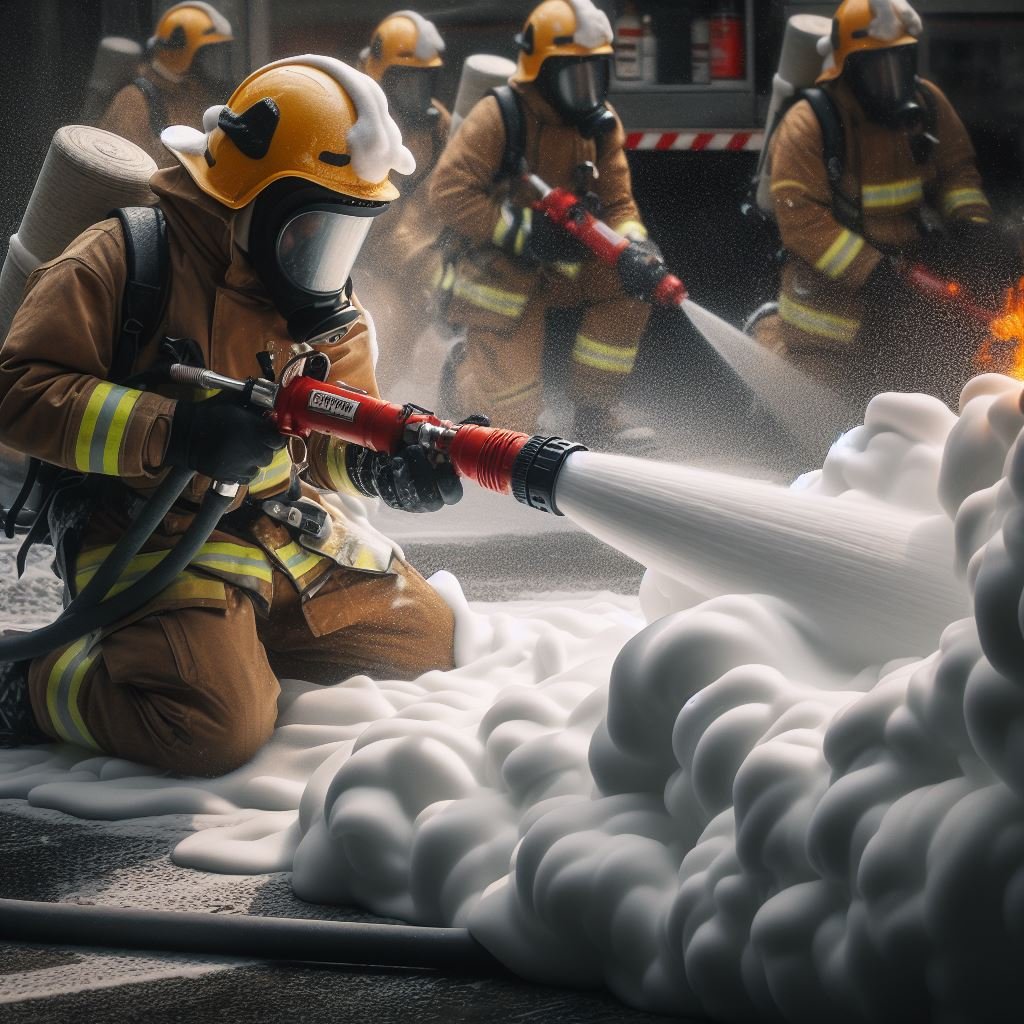
What is a Mobile Foam Unit: Foam Concentrate Types Used – AFFF, FFFP and AR-AFFF
What is a mobile foam unit? It is a portable firefighting system designed for rapid deployment, featuring a foam concentrate tank, water pump, inductor, hoses, and nozzles to produce foam blankets that suppress flammable liquid fires effectively[1][2][3]. This subtopic explores the essential foam concentrate types—AFFF, FFFP, and AR-AFFF—compatible with these units, crucial for international buyers in petrochemical, aviation, and industrial sectors seeking compliant solutions from ISO 9001:2015 certified manufacturers like Kinde Fire in Ahmedabad, India.
Introduction
Mobile foam units are indispensable for high-risk environments like oil depots, solvent storage, and petrochemical plants, where quick foam application prevents fire escalation[1][3]. As exporters to 26+ countries with 15+ years of experience and 1000+ projects, Kinde Fire ensures units compatible with international standards including IS 636, IS 903, IS 5290, and NFPA guidelines[3]. This article delves into AFFF (Aqueous Film-Forming Foam), FFFP (Film-Forming Fluoroprotein), and AR-AFFF (Alcohol-Resistant Aqueous Film-Forming Foam), highlighting their roles in optimizing fire suppression for global industrial buyers.
Role in Industrial Fire Safety
These concentrates mix with water and air via the unit’s inductor to form stable blankets that smother flames, cool surfaces, and prevent re-ignition[2][3]. Verify standards at bis.gov.in for IS 636 compliance on foam performance.
Export Considerations for Buyers
- Compatibility with pressure ratings up to 7 bar for global hydrant systems.
- Corrosion-resistant FRP tanks (100-200L capacity) for durability in harsh climates[4].
- Custom configurations for NFPA 11 and ICAO airport standards.
Link to Parent Guide
For a comprehensive overview, read our parent pillar article: What is a Mobile Foam Unit? Complete Guide for Industrial Buyers.
What is a Mobile Foam Unit and Why Foam Concentrates Matter
A mobile foam unit is a self-contained, trolley-mounted system with foam tank, inductor, and hoses for instant deployment by one operator, ideal for hard-to-reach fire zones[1][5]. Foam concentrates determine efficacy against specific fuels, making selection critical for international compliance.
Core Components and Operation
- Connect to pressurized water (4-7 bar).
- Inductor proportions foam at 3-6% ratio.
- Nozzle generates expanded foam blanket.
Importance of Concentrate Selection
Wrong concentrate fails against polar solvents; AFFF suits hydrocarbons, while AR-AFFF handles alcohols[3]. Kinde Fire units support all types per IS 5290.
Global Standards Compliance
- NFPA 11: Foam equipment design.
- IS 903: Foam performance testing.
- ISO 9001:2015 certified manufacturing in Naroda, Ahmedabad, Gujarat.
AFFF Foam Concentrates: Ideal for Petroleum Fires
AFFF creates a thin aqueous film on hydrocarbon fuels like diesel and petrol, rapidly suppressing vapors and cooling surfaces for quick knockdown[2][3]. Perfect for mobile units in oil terminals.
How AFFF Works in Mobile Units
The synthetic surfactant forms a vapor-sealing film, effective at 3% concentration with water at 7 bar pressure[1]. Deployment covers large areas swiftly.
Applications and Advantages
- Oil depots, fuel loading bays.
- Low expansion ratio for precise application.
- Cost-effective for standard hydrocarbon risks.
Standards and Kinde Fire Compatibility
Meets IS 636 (verify at bis.gov.in); our units feature 150L tanks with 6% inductors for sustained discharge[4]. Exported to 26+ countries.
FFFP Foam Concentrates: Enhanced Burnback Resistance
FFFP combines protein base with fluorochemicals for superior burnback resistance, forming thicker, heat-resistant blankets on flammable liquids[3]. Essential for sustained fires in industrial settings.
Mechanism and Fire Suppression
Protein stabilizes film, resisting 20+ minutes burnback at 1000°C, outperforming AFFF in wind[2]. Inductor mixes at 3% for mobile unit efficacy.
Key Use Cases
- Petrochemical plants with spill risks.
- Aviation fuel storage (ICAO compliant).
- Solvent warehouses.
Comparison Table: AFFF vs. FFFP
| Feature | AFFF | FFFP |
|---|---|---|
| Primary Fuel Type | Hydrocarbons | Hydrocarbons + Burnback |
| Expansion Ratio | 7:1 | 8:1 |
| Burnback Resistance | Moderate | High (20+ min) |
| Concentration | 3-6% | 3% |
| Pressure Rating | Up to 7 bar | Up to 10 bar |
| Standards | IS 636, NFPA 11 | IS 5290, NFPA 11 |
AR-AFFF Foam Concentrates: Protection Against Polar Solvents
AR-AFFF features polymers that gel on polar solvents like alcohols and ketones, preventing foam breakdown for effective suppression in chemical plants[3]. Critical for diverse fuel risks.
Unique Properties and Deployment
6% concentration forms protective gel layer, stable under 7 bar pressure in mobile units[1]. Ideal for mixed fuel environments.
Industrial Applications
- Paint factories, ketone storage.
- Pharma and biofuel facilities.
- Marine engine rooms.
Integration with Kinde Fire Units
Our 200L FRP units support AR-AFFF per NFPA 11, with quick-connect hoses for 23m reach[4]. 1000+ projects worldwide.
Frequently Asked Questions About What is a Mobile Foam Unit Foam Types
What foam concentrate is best for petroleum fires in a mobile foam unit?
AFFF excels on hydrocarbons like diesel, forming a vapor-suppressing film at 3% mix, compliant with IS 636[3].
How does FFFP improve on AFFF in mobile units?
FFFP offers superior burnback resistance for 20+ minutes, ideal for windy petrochemical sites[2]. Kinde Fire units optimize this at 7 bar.
Why choose AR-AFFF for polar solvent risks?
It gels on alcohols/ketones, preventing breakdown unlike standard foams; essential for chemical industries[3].
Are Kinde Fire mobile foam units standards-compliant?
Yes, ISO 9001:2015 certified, meeting IS 903, NFPA 11; verify at bis.gov.in. Exported to 26+ countries.
Conclusion and Contact
Selecting the right foam—AFFF for petroleum, FFFP for burnback resistance, AR-AFFF for polar solvents—maximizes mobile foam unit performance in global operations. With 15+ years, 1000+ projects, and ISO 9001:2015 certification from Naroda, Ahmedabad, Kinde Fire delivers tailored solutions. Contact us on WhatsApp +91-8141899444 for a 4-hour quote promise. Back to top: Top.
{
“@context”: “https://schema.org”,
“@type”: “FAQPage”,
“mainEntity”: [
{
“@type”: “Question”,
“name”: “What is a mobile foam unit?”,
“acceptedAnswer”: {
“@type”: “Answer”,
“text”: “A mobile foam unit is a portable firefighting system that generates and applies foam to suppress Class B fires effectively. Kinde Fire’s ISO 9001:2015 certified units are designed for rapid deployment in industrial environments.”
}
},
{
“@type”: “Question”,
“name”: “What is AFFF foam concentrate used for in mobile foam units?”,
“acceptedAnswer”: {
“@type”: “Answer”,
“text”: “AFFF (Aqueous Film-Forming Foam) is ideal for hydrocarbon fires like petroleum, forming a thin film to suppress vapors and extinguish flames quickly. It’s commonly used in mobile foam units for spill fires in refineries and storage areas.”
}
},
{
“@type”: “Question”,
“name”: “How does FFFP differ from AFFF in mobile foam applications?”,
“acceptedAnswer”: {
“@type”: “Answer”,
“text”: “FFFP (Film-Forming Fluoroprotein) combines AFFF’s quick knockdown with protein foam’s burnback resistance, making it superior for sustained fire protection. It’s perfect for mobile foam units in high-risk industrial scenarios requiring longer foam stability.”
}
},
{
“@type”: “Question”,
“name”: “When should AR-AFFF be used with a mobile foam unit?”,
“acceptedAnswer”: {
“@type”: “Answer”,
“text”: “AR-AFFF (Alcohol-Resistant AFFF) is essential for polar solvent fires like alcohols or ketones, forming a protective polymer layer against foam breakdown. Mobile foam units equipped with AR-AFFF ensure reliable suppression in chemical plants.”
}
}
]
}