What is a Mobile Foam Unit? Complete Guide for Industrial Buyers
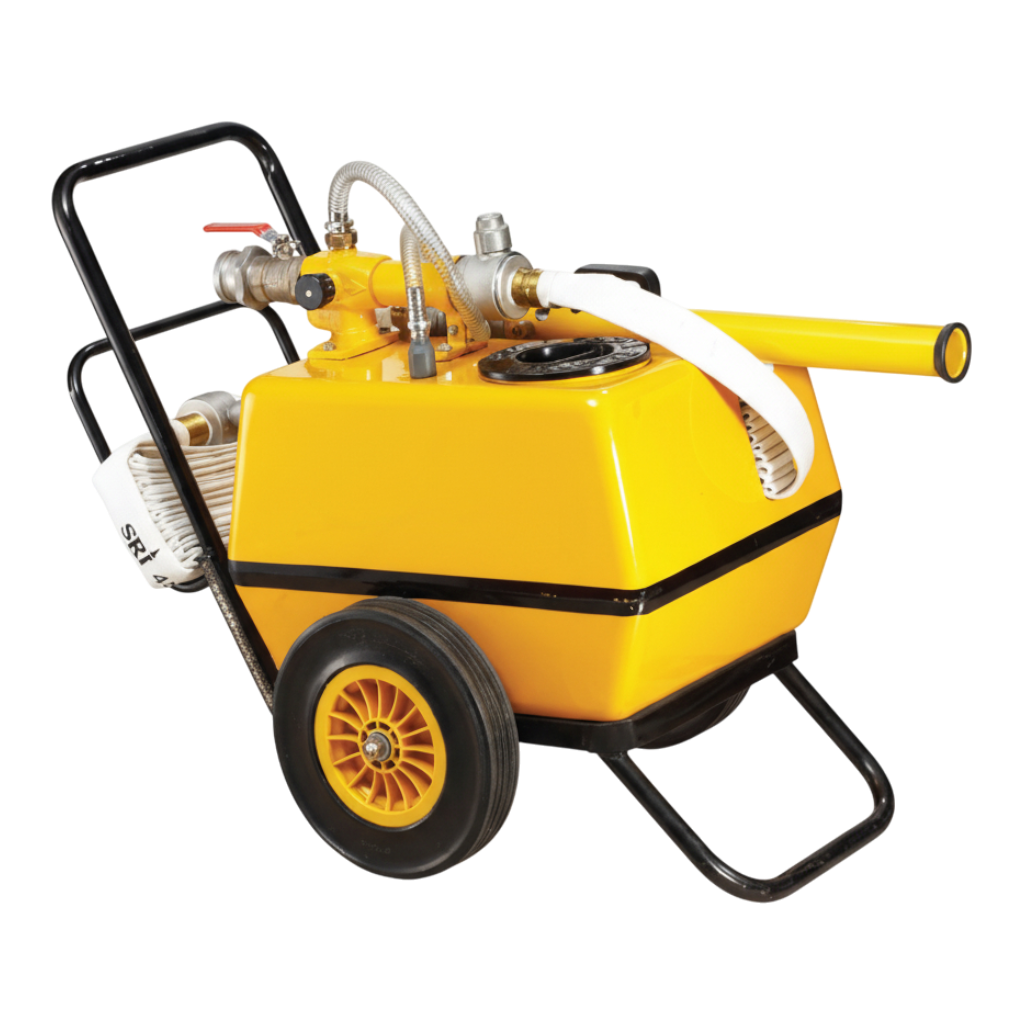
Understanding what is a mobile foam unit is essential for any industrial facility manager, fire safety officer, or procurement specialist who needs rapid, flexible, and reliable fire suppression capability. A mobile foam unit is a self-contained, wheeled or trolley-mounted firefighting system that combines a foam concentrate tank, inductor, hose reel, and branch pipe into a single deployable assembly — capable of generating and projecting foam onto hydrocarbon, flammable liquid, and chemical fires within seconds of positioning. This guide covers everything international buyers need to know, from components and working principles to applicable standards and selection criteria.
Definition and Key Components of a Mobile Foam Unit
Before examining technical specifications, it is worth establishing a precise definition. What is a mobile foam unit, in engineering terms? It is a portable, non-fixed fire suppression apparatus designed to produce foam solution by proportioning foam concentrate into a pressurised water supply, then aerating the mixture through a branch pipe or monitor to create a stable foam blanket over a burning or at-risk surface. Unlike permanently piped deluge or fixed foam systems, a mobile unit can be repositioned, transported between sites, or pre-positioned at multiple risk locations within a facility.
At Kinde Fire — ISO 9001:2015 certified manufacturers based in Naroda, Ahmedabad, Gujarat, India — mobile foam units are engineered to comply with IS 15105, NFPA 11, and related international standards, ensuring they perform reliably across the 26+ countries where Kinde Fire equipment is deployed.
The Foam Concentrate Tank
The foam concentrate tank is the primary storage vessel on any mobile foam unit. Kinde Fire manufactures tanks in capacities ranging from 100 litres to 1,000 litres, with custom sizes available for specific project requirements. Tank materials include:
- FRP (Fibre-Reinforced Plastic) — corrosion-resistant, lightweight, ideal for coastal or chemically aggressive environments
- Stainless Steel (SS 304 / SS 316) — superior hygiene, excellent for food processing and pharmaceutical facilities
- Mild Steel (MS) with internal epoxy lining — cost-effective for general industrial use, compliant with IS 636 pressure vessel guidelines
All tanks are fitted with level indicators, fill points, drain valves, and inspection hatches. Operating pressure is typically rated at 6 to 10 bar depending on the inductor and supply line configuration.
The Proportioner / Inductor
The in-line inductor (proportioner) is the critical metering device that draws foam concentrate from the tank into the water stream at a precise ratio — typically 1%, 3%, or 6% depending on the foam concentrate type and fire hazard class. Kinde Fire inductors are manufactured to IS 5290 specifications, ensuring accurate proportioning across the full range of flow rates from 200 LPM to 2,000 LPM. Incorrect proportioning is one of the leading causes of foam system failure; Kinde Fire’s precision-machined inductors eliminate this risk.
Hose Assembly, Branch Pipe and Frame
The delivery hose is typically a 63 mm or 75 mm lay-flat or semi-rigid hose conforming to IS 903, rated for working pressures of 8 to 12 bar. It connects the inductor outlet to the foam branch pipe — a low-expansion or medium-expansion nozzle that aerates the foam solution. The entire assembly is mounted on a heavy-duty galvanised or powder-coated mild steel frame with pneumatic or solid rubber wheels for easy manoeuvring across industrial floors, gravel, or uneven terrain.
How a Mobile Foam Unit Works: Step-by-Step
Many buyers ask about the operational principle when evaluating what is a mobile foam unit and how it differs from a dry powder extinguisher or CO₂ system. The foam generation and delivery process follows a clear sequence:
Step 1 — Positioning and Water Supply Connection
- Wheel the mobile foam unit to within hose-reach distance of the fire zone (typically 30 to 60 metres depending on hose length supplied).
- Connect the inlet coupling of the unit to a pressurised water supply — a hydrant, fire pump, or engine-driven pump — at a supply pressure of 5 to 8 bar.
- Ensure the tank ball valve is open so concentrate can flow to the inductor.
Step 2 — Foam Generation via Induction
- Water flows through the venturi-type inductor, creating a local pressure drop (venturi effect) that draws foam concentrate from the tank at the pre-set ratio (1%, 3%, or 6%).
- The resulting foam solution (water + concentrate mixture) travels through the hose at working pressure.
- At the branch pipe nozzle, atmospheric air is entrained into the foam solution, producing expanded foam with an expansion ratio of 6:1 to 10:1 for low-expansion applications or up to 500:1 for high-expansion foam units.
Step 3 — Foam Application and Fire Suppression
- The operator directs the foam stream using the branch pipe in a gentle banking technique — allowing foam to flow across the burning liquid surface without breaking it up and splashing burning fuel.
- The foam blanket smothers oxygen supply, cools the fuel surface, and creates a vapour seal, extinguishing the fire and preventing re-ignition.
- Once the tank concentrate is exhausted, the operator can refill the tank on-site or connect a second unit — a significant tactical advantage over fixed systems during extended incidents.
Types of Mobile Foam Units and Foam Concentrates
Selecting the right variant requires understanding both the unit construction material and the foam concentrate chemistry. Kinde Fire’s product range — available at mobilefoamunit.in/mobile-foam-unit — covers all major configurations.
Construction Material Variants
| Variant | Material | Best Application | Relative Weight | Corrosion Resistance |
|---|---|---|---|---|
| FRP Mobile Foam Unit | Fibre-Reinforced Plastic | Offshore, coastal, chemical plants | Lightest | Excellent |
| Stainless Steel Unit | SS 304 / SS 316 | Pharma, food, clean-room environments | Medium-Heavy | Excellent |
| Mild Steel Unit | MS + Epoxy Lining | General industry, warehouses, depots | Medium | Good (with maintenance) |
Foam Concentrate Types
The choice of foam concentrate is governed by the fuel type, environmental regulations, and applicable standards such as NFPA 11. The three principal concentrates used with Kinde Fire mobile units are:
- AFFF (Aqueous Film-Forming Foam) — the industry standard for hydrocarbon fuel fires (Class B). Provides rapid flame knockdown and vapour suppression. Used at 3% or 6% proportioning ratios. Widely specified in aviation, petrochemical, and fuel storage applications.
- FFFP (Film-Forming Fluoroprotein Foam) — combines the heat resistance of protein foam with the fast-spreading film of AFFF. Preferred for crude oil tank fires and refineries. Used at 3% or 6% ratios.
- AR-AFFF (Alcohol-Resistant Aqueous Film-Forming Foam) — formulated with a polysaccharide polymer that forms a protective membrane when attacking polar solvent fires (alcohols, ketones, esters). Critical for solvent storage facilities, distilleries, and chemical manufacturing. Used at 3% × 3% or 6% × 6% ratios on polar/non-polar fuels respectively.
Capacity Range Options
Kinde Fire manufactures mobile foam units across a comprehensive capacity range to match project scale:
- 100 L and 200 L — Compact first-response units for small facilities, fuel dispensing stations, and workshops
- 500 L — Mid-range units for medium-scale industrial plants, transformer yards, and paint shops
- 1000 L — Heavy-duty units for refineries, LPG bulk plants, and large fuel storage depots
- Custom sizes — Engineered to order for unique facility requirements, EPC project specifications, or OEM integration
Full product specifications and datasheets are available at mobilefoamunit.in/foam-trolley-unit.
Standards, Capacity Ranges and Mobile vs Fixed Foam Systems
For international procurement teams, understanding the regulatory framework is as important as the technical specification. This section addresses the standards that govern what is a mobile foam unit in formal compliance terms, and when a mobile system is the appropriate choice versus a fixed installation.
Applicable Indian and International Standards
All Kinde Fire mobile foam units are designed, tested, and documented against the following standards. Buyers can verify IS standard details at the official Bureau of Indian Standards (bis.gov.in):
- IS 15105 — Design and installation of fixed low-expansion foam systems for surface application (principal Indian standard for foam systems)
- NFPA 11 — Standard for Low-, Medium-, and High-Expansion Foam (NFPA, USA) — the primary international reference for foam system engineering
- IS 636 — Non-percolating flexible fire hose specifications; governs hose assembly quality and burst pressure requirements
- IS 903 — Fire hose delivery couplings, branch pipes, and nozzles; ensures compatibility across fire hydrant infrastructure
- IS 5290 — Specification for portable foam generators (inductor / branchpipe assemblies)
- ISO 9001:2015 — Kinde Fire’s quality management certification, ensuring consistent manufacturing and traceability across all production batches
Mobile Foam Units vs Fixed Foam Systems
A common question from project consultants and HSE managers is: when should I specify a mobile unit versus a fixed suppression system? The following comparison clarifies the decision criteria:
| Criterion | Mobile Foam Unit | Fixed Foam System |
|---|---|---|
| Deployment Speed | Manual positioning required (2–5 min) | Automatic or remote activation (<60 sec) |
| Flexibility | Redeployable across multiple risk zones | Protects fixed, pre-defined hazard area only |
| Installation Cost | Low — no civil works required | High — pipework, sprinklers, pump room needed |
| Maintenance | Simple periodic inspection and refill | Complex — requires annual system testing |
| Best Application | Temporary sites, backup protection, first response, remote areas | Permanent high-risk installations — refineries, tank farms |
| NFPA 11 Classification | Portable / Semi-portable supplemental system | Fixed system — primary suppression |
When Mobile Foam Units Are Specified by International Codes
Under NFPA 11 (Section 5.8) and the OISD (Oil Industry Safety Directorate) guidelines, mobile foam units are mandated as supplemental firefighting resources at facilities including:
- Above-ground storage tank (AST) farms where fixed systems protect individual tanks but inter-tank spaces require mobile coverage
- Loading and unloading gantries for flammable liquids at petroleum depots and ports
- Aviation refuelling stations where aircraft hangars and aprons have fixed systems, but ramp-side coverage requires mobile units
- Construction and temporary plant sites where permanent installation is not feasible
- Industrial facilities in export processing zones, SEZs, or remote locations with limited infrastructure
Frequently Asked Questions About What is a Mobile Foam Unit
What is a mobile foam unit and how is it different from a fire extinguisher?
A mobile foam unit is a large-capacity, wheeled firefighting system designed to deliver sustained foam output — typically from 100 to 1,000+ litres of concentrate — over extended fire incidents at industrial facilities. A portable fire extinguisher, by contrast, carries only 6 to 50 litres and is intended for immediate first-response to small fires. Mobile foam units are classified under NFPA 11 as semi-portable systems and require a pressurised water supply to operate, making them suitable for protecting large flammable liquid risk areas such as tank farms, loading bays, and transformer yards.
Which foam concentrate should I use with a mobile foam unit for a petroleum storage facility?
AFFF (Aqueous Film-Forming Foam) at a 3% proportioning ratio is the most widely specified concentrate for hydrocarbon fuel fires in petroleum storage facilities, as it provides rapid film formation across the fuel surface and excellent vapour suppression. For facilities handling both hydrocarbon fuels and polar solvents (alcohols, ethanol, methanol), AR-AFFF is recommended as it is effective on both fuel classes. Always confirm concentrate selection against your local regulatory authority requirements and NFPA 11 hazard classification before procurement.
What IS and NFPA standards apply to mobile foam unit procurement in India and internationally?
In India, the primary standards are IS 15105 (foam systems design), IS 5290 (portable foam generators), IS 903 (branch pipes and couplings), and IS 636 (fire hose). Internationally, NFPA 11 governs low-, medium-, and high-expansion foam system design and semi-portable foam equipment specifications. Buyers can verify IS standard status and amendments directly at the official Bureau of Indian Standards website at bis.gov.in. Kinde Fire’s units are designed to satisfy both IS and NFPA requirements simultaneously.
What is the typical lead time for a custom-capacity mobile foam unit from Kinde Fire?
Standard capacity mobile foam units (100 L, 200 L, 500 L, 1,000 L) are available from Kinde Fire’s Naroda, Ahmedabad manufacturing facility with a lead time of 2 to 4 weeks for domestic and export orders. Custom-engineered units — including non-standard tank capacities, special alloy construction, or integrated foam monitors — are quoted on a project basis with lead times of 4 to 8 weeks from order confirmation. Contact the Kinde Fire technical sales team via WhatsApp at +91-8141899444 for a formal quotation within 4 hours.
Conclusion: Source Your Mobile Foam Unit from a Trusted Manufacturer
Having explored what is a mobile foam unit in complete technical detail — from its definition and components to working principles, foam concentrate chemistry, applicable standards, and the mobile-versus-fixed decision framework — the strategic value of this equipment class for industrial fire safety is clear. A correctly specified and maintained mobile foam unit delivers:
- Rapid, flexible fire suppression capability across multiple risk zones
- Compliance with IS 15105, NFPA 11, IS 5290, IS 636, and IS 903 standards
- Cost-effective protection compared to fixed system installation for supplemental and backup coverage
- Scalable capacity from 100 L to 1,000 L+ to match any industrial risk profile
- Choice of FRP, stainless steel, or mild steel construction for every operating environment
Kinde Fire — headquartered at Naroda, Ahmedabad, Gujarat, India — has been manufacturing mobile foam units and fire safety equipment for 15+ years, completing 1,000+ projects across 26+ countries including the Middle East, Africa, Southeast Asia, and Europe. As an ISO 9001:2015 certified manufacturer, every unit leaving our facility carries full documentation, test certificates, and compliance records to support your regulatory submissions and insurance requirements.
Our export sales team serves international buyers with competitive FOB/CIF pricing, third-party inspection support (SGS, Bureau Veritas), and multilingual documentation. We understand the urgency of fire safety procurement — which is why Kinde Fire guarantees a detailed technical and commercial quote within 4 hours for all enquiries received during business hours.
Contact Kinde Fire today:
- 🟢 WhatsApp (4-hour quote guarantee): +91-8141899444
- 🌐 Website: www.mobilefoamunit.in
- 📍 Manufacturing Facility: Naroda, Ahmedabad, Gujarat — 382330, India
Send us your facility hazard details, required tank capacity, foam concentrate type, and applicable standards — and our fire safety engineers will respond with a fully compliant mobile foam unit specification and price within 4 hours, guaranteed.