Handline Fire Fighting Nozzles
Six professional-grade handline nozzle types for manual firefighting — from multi-pattern jet/spray/fog to smooth bore branch pipes and ergonomic pistol grip units. Flow rates from 95 to 450 LPM. Aluminium, Brass, Gunmetal & SS construction. Exporting to 26+ countries.
Product Photos
in src=""
in src=""
in src=""
in src=""
Handline Nozzle Range
Six professional nozzle types for every manual firefighting application — from multi-pattern fog nozzles for structural fires to smooth bore branch pipes for maximum throw distance in industrial settings.

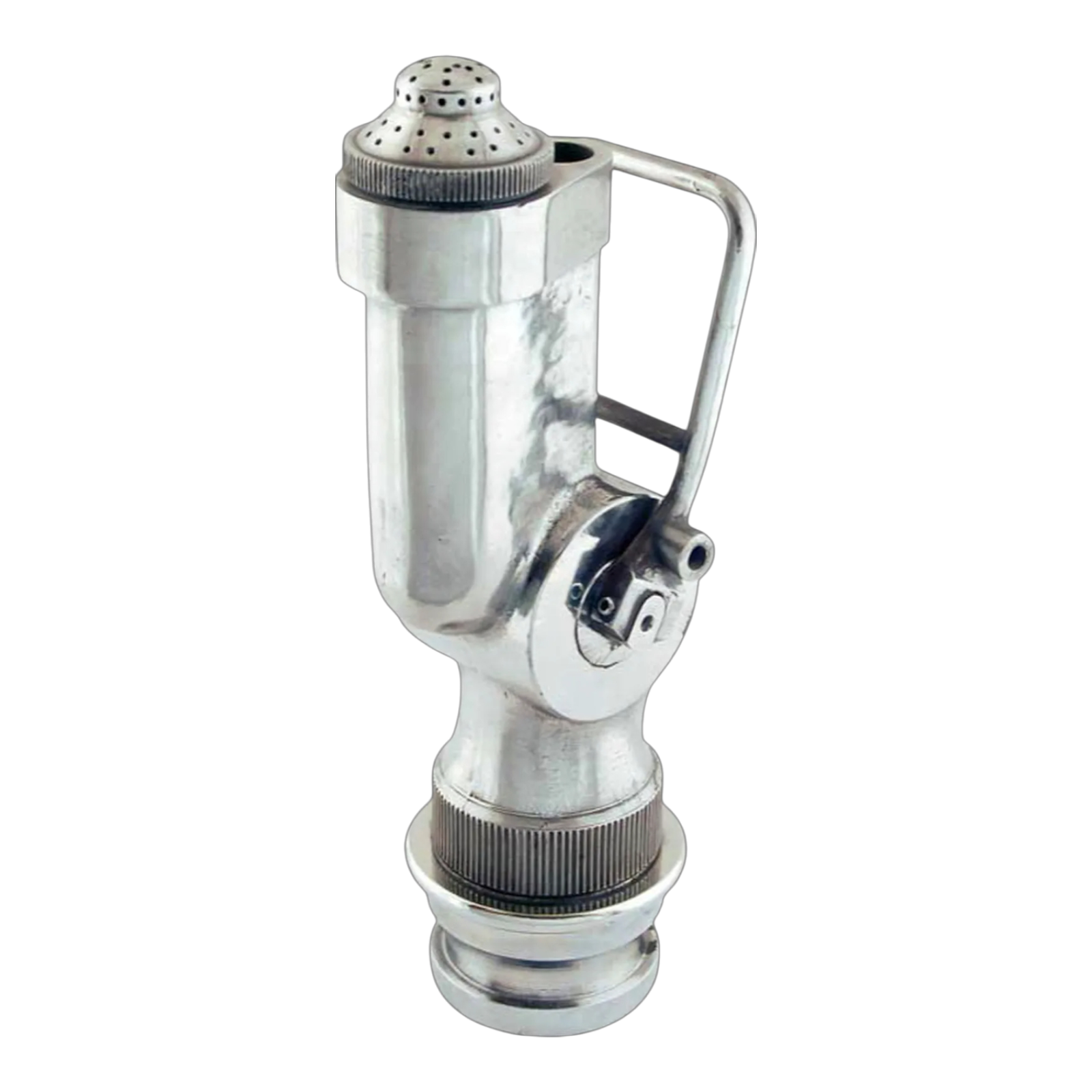
Jet / Spray / Fog Nozzle
Multi-pattern handline nozzle with single-hand twist operation. Switches seamlessly between solid jet, variable spray, wide fog, and water curtain — no tools required.
- Flow Rate: 180 / 225 / 320 LPM
- Material: Hard Anodized Aluminium
- Operating Pressure: 3.5–7 Bar
- Inlet: 1.5″ / 2″ / 63mm BS or Storz
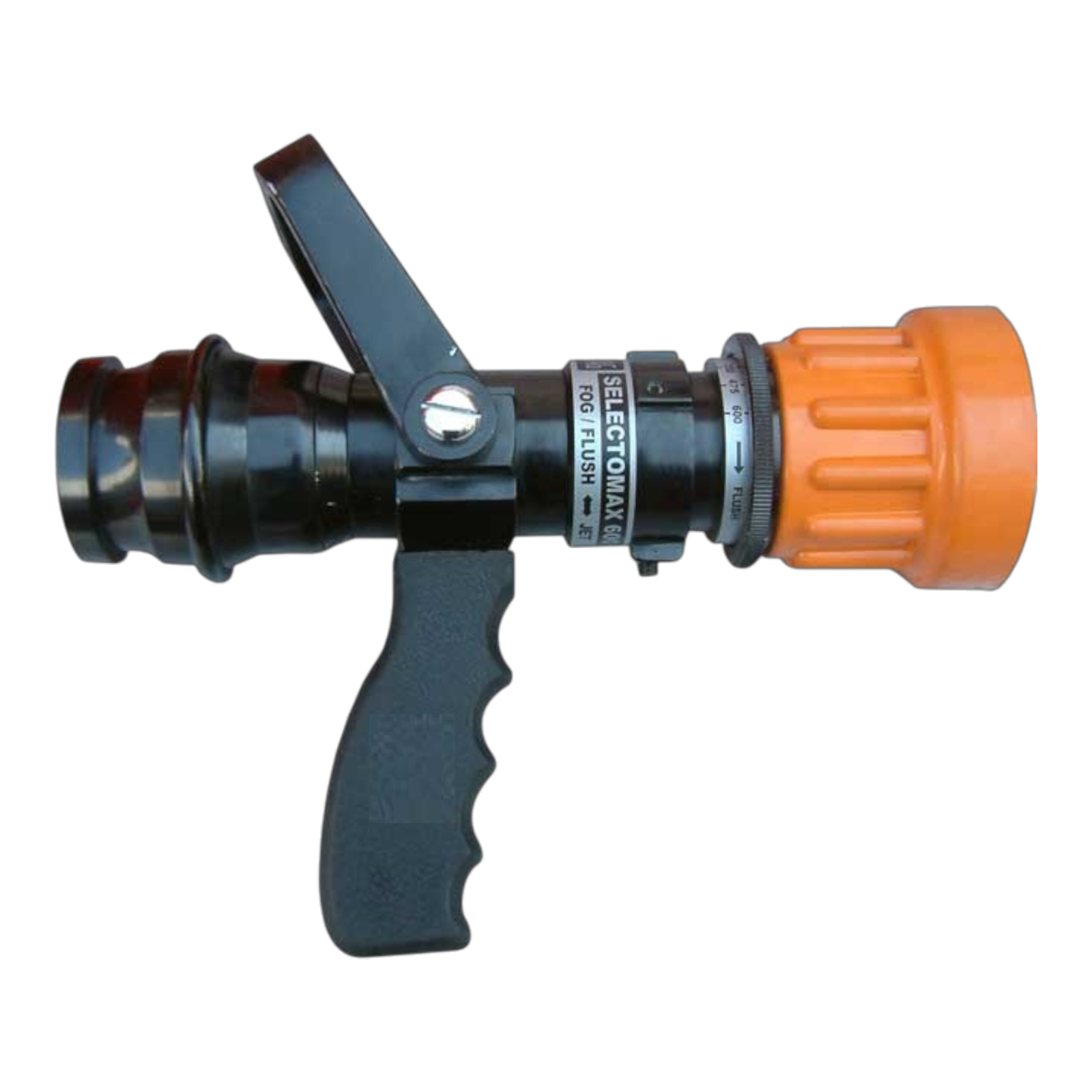
Selectable Flow Nozzle
Variable gallonage nozzle with 5 flow settings adjustable on-the-fly during live operations. Spinning teeth baffle for superior fog pattern quality across all flow rates.
- Flow Settings: 95 / 180 / 225 / 320 / 450 LPM
- Material: Black Anodized Aluminium Alloy
- Operating Pressure: 7 Bar (100 PSI)
- Weight: 1.8–2.5 kg (Lightweight)
Constant Flow Nozzle (Automatic)
Pressure-compensating automatic nozzle that maintains a consistent flow rate regardless of inlet pressure fluctuations — no manual adjustment needed during firefighting operations.
- Flow Rate: 95 / 125 / 180 LPM (Fixed)
- Auto Pressure Range: 4–10 Bar
- Material: Aluminium with SS Internal Spring
- Coupling: NH / BS 1.5″ Full Swivel
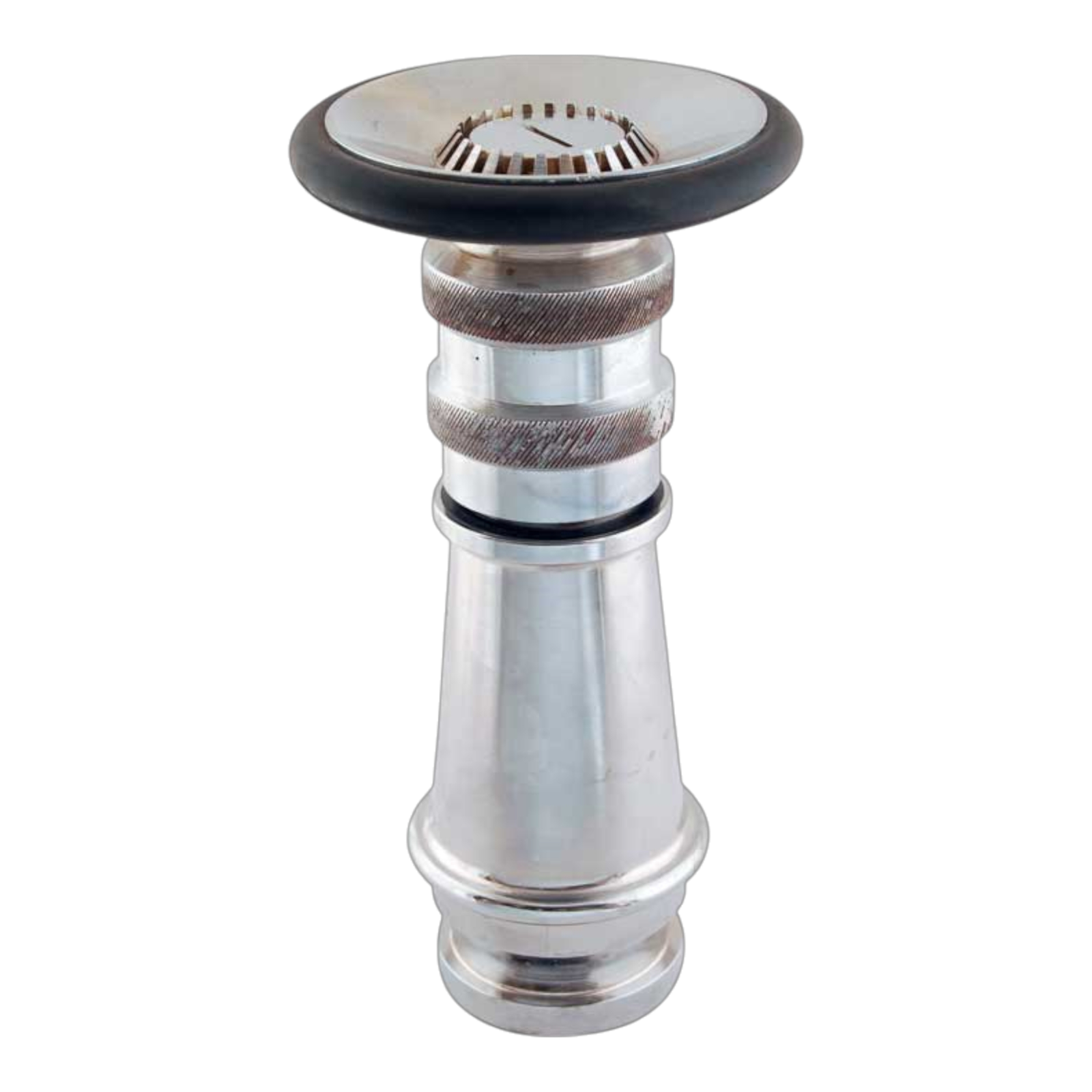
Branch Pipe (Smooth Bore)
Traditional smooth bore branch pipe delivering maximum throw distance, penetration force, and minimum friction loss. Interchangeable tip sizes for flow rate selection without a separate nozzle change.
- Tip Size: 13mm / 16mm / 19mm / 25mm
- Flow Rate: 180–450 LPM (tip dependent)
- Material: Chrome Plated Brass
- Throw Distance: Up to 50 metres
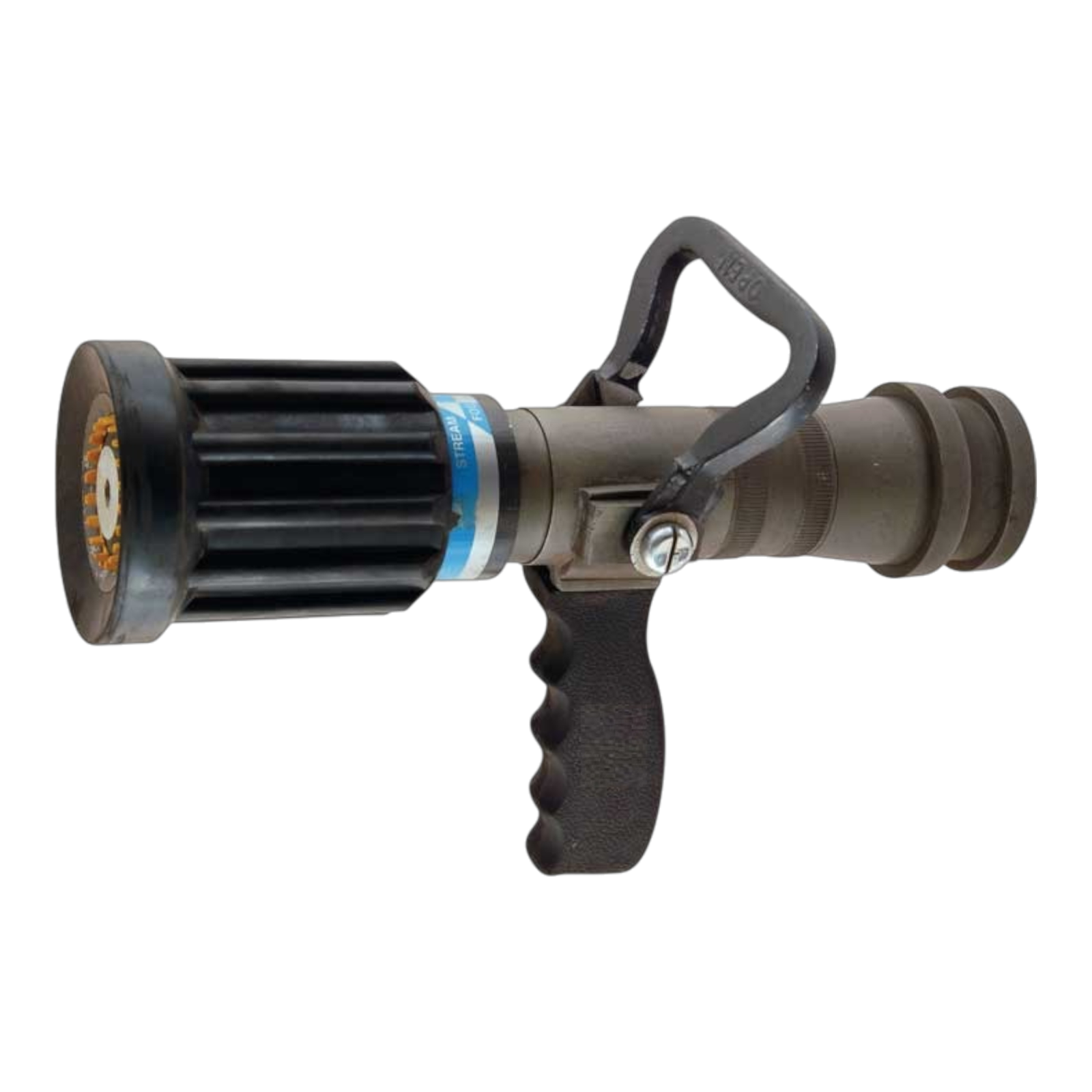
Pistol Grip Nozzle
Ergonomic pistol grip design with trigger shut-off valve for single-handed operation. Full-time swivel coupling prevents hose twisting during rapid deployment and repositioning.
- Flow Rate: 95 / 180 / 225 LPM
- Material: Black Anodized Aluminium
- Valve: Stainless Steel Ball Valve
- Coupling: 1.5″ NH Rocker Lug Swivel
Low Pressure Fog Nozzle
Specifically designed for limited water supply situations and low-pressure systems (30–50 PSI). Wide fog pattern provides thermal protection for the operator even at reduced flow rates.
- Flow Rate: 95 / 125 LPM
- Operating Pressure: 2–3.5 Bar (30–50 PSI)
- Material: Aluminium / Brass Combo
- Fog Angle: 30° to 90° adjustable
Technical Specifications
Complete flow rate, pressure, throw distance, material, and coupling data for all six nozzle types — use this to select the correct nozzle for your hose diameter, pump pressure, and application.
| Nozzle Type | Flow Rate (LPM) | Operating Pressure | Throw Distance | Pattern Options | Inlet Coupling | Material | Weight (kg) | Best Application |
|---|---|---|---|---|---|---|---|---|
| Jet / Spray / Fog | 180 / 225 / 320 | 3.5–7 Bar | 30–40 m (jet) | Jet · Spray · Fog · Curtain | 1.5″ or 2″ BS/Storz | Anodized Aluminium | 1.2–1.8 | Municipal · Industrial |
| Selectable Flow | 95 / 180 / 225 / 320 / 450 | 7 Bar (100 PSI) | 28–38 m | 5 Flow Settings + Fog | 1.5″ or 2″ NH/BS | Black Anodized Alloy | 1.8–2.5 | Multi-risk · Airports |
| Constant Flow (Auto) | 95 / 125 / 180 | 4–10 Bar Auto | 25–35 m | Fog + Jet (auto) | 1.5″ NH Full Swivel | Aluminium + SS Spring | 1.5–2.0 | Structural · Interior |
| Branch Pipe (Smooth Bore) | 180 / 250 / 320 / 450 | 4–12 Bar | Up to 50 m | Solid Jet Only | 2″ / 2.5″ BS/NH | Chrome Plated Brass | 0.8–1.4 | Refinery · Marine |
| Pistol Grip | 95 / 180 / 225 | 3.5–7 Bar | 25–35 m | Jet · Spray · Fog | 1.5″ NH Rocker Lug | Black Anodized Alloy | 1.4–1.9 | Rescue · Rapid Deploy |
| Low Pressure Fog | 95 / 125 | 2–3.5 Bar | 15–22 m | 30°–90° Fog Angle | 1.5″ BS/NH | Aluminium / Brass | 0.9–1.3 | Rural · Wildland |
🔩 Coupling Options Available
All nozzles available with NH (National Hose), BSP, Storz 52mm/65mm, or Guillemin couplings to match your hose inventory. Specify at time of order — no price premium for standard coupling variants.
🎨 Colour & Finish Options
Standard: Natural anodized silver or black anodized. Optional: Red powder coat (municipal fire service specification), yellow, or custom RAL colour for civil defence and military orders of 50+ units.
🔧 Spare Parts Supply
O-ring kits, replacement baffles, nozzle tip sets, and trigger valve rebuild kits available as separate spare parts. Minimum order 10 sets. Ideal for keeping operational stock in remote field locations.
Where Are Handline Nozzles Used?
Kinde Fire handline nozzles are deployed across 10+ sectors — from municipal fire brigades to oil refinery first response teams and civil defence units across three continents.
Municipal Fire Brigades
Urban and suburban fire departments using selectable flow and pistol grip nozzles for structure fires, vehicle fires, and general first response operations.
Selectable Flow / Pistol GripOil & Gas Refineries
Industrial fire teams using smooth bore branch pipes and jet/spray nozzles for process unit coverage, tank farm protection, and loading gantry first response.
Branch Pipe / Jet-Spray-FogAirports & Aviation
ARFF (Aircraft Rescue and Firefighting) teams at international airports — selectable flow nozzles on airport tender vehicles for rapid fuel fire response.
Selectable FlowMarine & Shipboard
Vessel-mounted handline nozzles for shipboard firefighting — chrome brass branch pipes for engine room fires and jet/spray nozzles for cargo hold and deck fires.
Branch Pipe / Jet-Spray-FogIndustrial & Manufacturing
Factory and warehouse fire teams using constant flow automatic nozzles for consistent suppression performance in complex industrial layouts with variable pressure mains.
Constant Flow / SelectableMining Operations
Underground and surface mine fire response teams in South Africa, Zambia, and Zimbabwe using portable nozzle kits with low-pressure fog for conveyor belt fires.
Low Pressure Fog / Branch PipeForestry & Wildland
Wildland fire crews and rural fire departments in Kenya, Tanzania, and India using low-pressure fog nozzles on water tankers where municipal water pressure is unavailable.
Low Pressure FogCivil Defence & Military
Government civil defence units and military fire brigades across Gulf and Africa — bulk supply of standardised nozzle kits with matching couplings for fleet compatibility.
All Types — Bulk Supply🏜️ Middle East & GCC
6 Countries🌍 Africa
6 Countries🌏 Asia Pacific
6 Countries🎯 Need Nozzles for a Specific Industry, Hose Size, or Coupling Type?
Share your flow requirement, hose diameter, and coupling standard — we'll confirm the correct nozzle and provide a quote within 4 hours.
Troubleshooting & FAQ
18 real-world questions covering pattern switching faults, flow inconsistency, coupling leaks, baffle wear, pistol grip valve problems, and field maintenance — tagged by nozzle type and geography.
🌀 Jet / Spray / Fog Nozzle Problems
3 QuestionsRoot Cause: The pattern selector collar on aluminium nozzles uses a helical thread or cam mechanism. In Gulf and coastal deployments, fine sand infiltrates the collar thread and combines with dried salt residue to form a grit-paste that locks the collar. Infrequent rinsing after use accelerates this — salt from seawater or hard municipal water crystalises in the thread grooves within 4–6 weeks.
Fix: Do not force the collar — forced rotation strips the aluminium thread. Soak the collar joint in fresh water for 10–15 minutes to dissolve salt deposits. Apply WD-40 or penetrating oil around the collar-to-body joint and work it in with small back-and-forth movements. Once free, flush the thread groove thoroughly with clean water, dry, and apply a thin coat of silicone grease (not petroleum grease — it attracts grit). Going forward, rinse the nozzle with fresh water after every deployment and store with the collar in the straight-jet position to prevent grit compaction in the fog-position detent.
Root Cause: Uneven fog pattern is almost always caused by a damaged or partially blocked deflector baffle inside the nozzle tip. The baffle distributes the solid jet into the fog cone — if one section of the baffle is chipped (common after nozzle drops on concrete), corroded, or has scale buildup on part of its surface, the pattern becomes asymmetric. A bent or off-centre baffle from an impact causes the same result.
Fix: Unscrew the nozzle tip (counterclockwise — standard thread). Inspect the internal baffle for chips, cracks, scale, or distortion. Light scale can be removed with a soft brass brush and diluted white vinegar soak for 30 minutes — do not use steel wire brush as it scores the aluminium. If the baffle is chipped or bent, replace the nozzle tip assembly — do not attempt to reshape a damaged baffle as it will not produce a correct pattern. Replacement nozzle tip sets are available from Kinde Fire as spare parts. Always carry one spare tip set per nozzle on remote deployments.
Root Cause: The shutoff bail operates a ball valve or sliding sleeve with EPDM O-ring seals. After extended UV exposure in outdoor storage (common in GCC and Africa where nozzles are stored on vehicle exteriors), EPDM O-rings harden and lose their sealing ability. High chlorine in municipal water also degrades EPDM within 12–18 months. Physical damage from the nozzle being dropped while pressurised can also crack the bail housing or nick the ball valve seat.
Fix: Depressurise fully before disassembly. Disassemble the shutoff bail following the nozzle's service manual (typically 4 screws on the bail housing). Replace all O-rings in the shutoff assembly — use Viton O-rings for chlorinated water systems, or EPDM for standard freshwater/seawater systems. Apply silicone grease to all new seals. If the ball valve seat is scored, the entire shutoff assembly requires replacement — contact Kinde Fire for a bail replacement kit for your nozzle model. After reassembly, pressure test to working pressure before returning to service.
🔢 Selectable Flow Nozzle Problems
3 QuestionsRoot Cause: The flow selector ring rotates a metering insert or orifice plate inside the nozzle body to switch between flow settings. Under full operating pressure (7 Bar / 100 PSI), hydraulic forces act on the metering insert and increase the torque required to rotate the selector ring significantly — this is normal but becomes a problem when the selector mechanism is also contaminated with grit or the grease has dried out. In hot climates (Gulf, Africa), grease evaporates faster from unpainted aluminium bodies exposed to temperatures above 60°C in direct sun.
Fix: The flow selector should ideally be changed at lower pressures — reduce the upstream pressure to 2–3 Bar before switching settings if possible, then increase back to operating pressure. For lubrication: disassemble the selector ring, clean the metering insert and ring bore with solvent, and repack with high-temperature silicone grease rated to 150°C. For permanent improvement on Gulf deployments, store nozzles out of direct sunlight and in insulated bags between uses — this prevents grease evaporation. If the selector ring detent positions are worn and no longer click firmly, the selector ring assembly needs replacement.
Root Cause: Published flow rates for selectable nozzles are measured at 7 Bar (100 PSI) at the nozzle inlet under test conditions. In the field, the most common cause of lower-than-expected flow is insufficient inlet pressure — the supply pump is not delivering 7 Bar at the nozzle after accounting for hose friction losses, elevation, and other open hoses on the same main. A 65mm hose of 30 metres length at 450 LPM loses approximately 2.5 Bar — on a lower-pressure rural supply system this can reduce nozzle inlet pressure to 4–5 Bar, significantly reducing actual discharge.
Fix: Measure actual inlet pressure at the nozzle coupling using a calibrated hose gauge under flowing conditions. If below 7 Bar, the hydraulic system needs to be reviewed — increase pump pressure, reduce hose length, upgrade hose diameter, or close other outlets to concentrate pressure on the active line. If inlet pressure is confirmed at 7 Bar but flow is still low, check the metering orifice insert for scale or debris blockage — remove the selector ring and clean the orifice insert. Confirm the selector ring is positively engaged in the correct detent position and has not slipped between settings.
Root Cause: The spinning teeth baffle in a selectable flow nozzle rotates on a small central bearing pin. Rattling during operation indicates the baffle bearing is worn and has developed lateral play — the baffle is wobbling on the pin rather than spinning cleanly. This happens after heavy use (typically 200+ hours of operation) or following a hard drop. A bent baffle from physical impact produces the same symptom.
Fix: Remove the nozzle tip assembly and inspect the baffle bearing pin for wear — try the baffle by hand; if it wobbles laterally more than 1mm it needs replacement. If only the bearing pin is worn, replace the pin. If the baffle itself is bent or the teeth are chipped, replace the full baffle assembly. Kinde Fire supplies complete baffle/bearing rebuild kits as spare parts. Note: a small amount of baffle spin noise during operation is normal and indicates the baffle is functioning correctly — only rattle/vibration with lateral wobble indicates a fault.
🎯 Branch Pipe (Smooth Bore) Problems
3 QuestionsRoot Cause: Smooth bore branch pipe throw distance is critically dependent on the nozzle tip bore being perfectly smooth, round, and free of damage. Any corrosion pitting, scoring, or physical damage to the tip bore introduces turbulence into the water stream that disrupts the laminar flow required for maximum throw. Even a 0.5mm pit on the interior surface of a 19mm tip can reduce throw by 20–30%. Chrome plating erosion exposing the underlying brass is also a common cause — the rougher brass surface creates turbulence even without visible pitting.
Fix: Remove the tip and inspect the bore interior under good lighting — look for pitting, scoring, or chrome erosion. Run a finger around the interior — any roughness felt is significant. Lightly corroded tips can sometimes be restored by polishing the bore with a fine lapping compound on a dowel — but this must be done carefully to avoid changing the bore diameter. If in doubt, replace the tip. Tip sets are inexpensive; keeping a complete spare tip set (13/16/19/25mm) on site is standard practice for industrial fire teams. Also verify the tip is screwed fully home with no gap at the shoulder — even a 1mm step causes flow disruption.
Root Cause: Fishtailing of the water stream indicates turbulent flow in the branch pipe body upstream of the tip — the water is not straightening out before entering the tip bore. This is caused by: (1) a sharp elbow or rough weld bead in the upstream hose or pipe fitting that is creating rotational flow; (2) an upstream Y-strainer with a damaged basket producing uneven flow across its cross-section; or (3) the branch pipe body itself has an internal obstruction (debris, weld spatter from a repaired coupling) that disturbs the flow profile before it reaches the tip.
Fix: First verify by removing the branch pipe from the hose and running a short test — if the stream is straight when connected directly to a pump outlet but fishtails on the hose line, the problem is upstream turbulence. Inspect and straighten any sharp hose kinks near the nozzle end. Check the Y-strainer basket for damage. Flush the hose aggressively before connecting. If the branch pipe body is suspected, remove it and inspect the internal bore for obstructions — use a torch and look from the inlet end. Any internal burr or debris must be removed before returning to use.
Root Cause: Chrome plating adhesion failure is accelerated by two conditions: (1) salt air corrosion undercutting the chrome layer at any micro-crack or pin-hole in the plating — common in coastal Kenya, Nigeria, and Gulf coastal locations; (2) thermal cycling from hot ambient storage to cold water shock during use causing differential expansion between the chrome layer and brass substrate. Both causes result in delamination and flaking of the chrome into the water stream.
Fix: A branch pipe with actively flaking chrome must be taken out of service immediately — chrome flakes in a water stream will damage downstream hose fittings and the nozzle tip bore. The pipe should be stripped of all remaining chrome and either re-plated (if the brass substrate is in good condition and wall thickness is above minimum) or replaced. For coastal and high-humidity installations, specify nickel-chrome plated branch pipes (double layer — nickel undercoat + chrome topcoat) which resist salt undercut significantly better than single-layer chrome. Kinde Fire can supply nickel-chrome plated branch pipes on request.
🔫 Pistol Grip Nozzle Problems
3 QuestionsRoot Cause: The SS ball valve in a pistol grip nozzle operates against full line pressure when opening from the closed position. The torque required to crack the valve open is significantly higher than the torque to continue opening — this is normal for any ball valve. However, if the PTFE seats inside the ball valve have swollen (from exposure to certain foam concentrates) or if scale has built up between the ball and seat, the opening force becomes dangerously high. A grit-contaminated ball-to-seat interface also dramatically increases opening torque.
Fix: Depressurise, disassemble the ball valve (4 body bolts typically), and inspect the ball surface and PTFE seat inserts. Clean the ball with a soft cloth — do not use abrasive on the polished SS ball surface as any scratch increases wear on the PTFE seats. Replace PTFE seat inserts if they are deformed, cracked, or show foam chemical staining. Use PTFE seat inserts rated for the specific foam concentrate in use — AR-AFFF requires chemically resistant PTFE seat material. Reassemble with a light coat of silicone grease on the ball only. After reassembly verify the trigger opens smoothly at working pressure — it should require no more than 35N of trigger force on a correctly maintained nozzle.
Root Cause: The full-time swivel coupling uses a face seal O-ring between the rotating swivel ring and the fixed body. This O-ring takes wear from continuous rotation during use and from grit contamination in field conditions. The rocker lug design also means the coupling is frequently connected and disconnected under field conditions, and if the lug retaining ring is not fully engaged before pressurising, the face seal is misaligned and leaks immediately.
Fix: Depressurise. Inspect whether the leak is from the face seal (leaks circumferentially around the swivel ring) or from the lug engagement (leaks at the coupling face). For face seal leaks: remove the swivel ring retaining clip, slide out the ring, replace the face O-ring (standard size — check nozzle data sheet), apply silicone grease, and reassemble. For lug engagement leaks: ensure the rocker lug retaining ring has fully snapped into the locked position — it should be felt and heard clicking into place. If the lug retaining ring is bent or the lugs are worn, the coupling needs replacement. Always train operators to confirm full lug engagement before pressurising any line.
Root Cause: Standard pistol grip nozzles use natural rubber or SBR rubber for the grip guard and bumper. In Gulf climates where ambient temperature regularly exceeds 45°C and UV radiation is intense, standard rubber compounds degrade within 12–18 months — the rubber hardens, cracks, and eventually disintegrates. Exposure to AFFF foam concentrates (which contain surfactants) also accelerates SBR rubber degradation significantly.
Fix: Replace the rubber grip and bumper with EPDM or Neoprene grade rubber parts — both are far more UV and temperature resistant. When ordering nozzles for Gulf, Nigeria, or other high-UV/high-temperature deployments, specifically request EPDM rubber components. Kinde Fire can supply EPDM grip replacement kits. In the interim, deteriorated rubber should be removed and replaced immediately — sharp cracked rubber edges can cut operator hands during firefighting. Store nozzles in UV-protective bags or cases when not in use to extend rubber component life.
🌫️ Low Pressure Fog Nozzle Problems
3 QuestionsRoot Cause: Low pressure fog nozzles use a fixed deflector pin or disc at the nozzle tip to break the water stream into a cone-shaped fog pattern. If this deflector pin is missing (lost during a previous disassembly), bent backwards from a physical impact, or blocked by a solid piece of debris lodged in the nozzle bore, the water passes through as an undeflected solid jet regardless of operating pressure.
Fix: Remove the nozzle tip and visually confirm the deflector pin/disc is present, undamaged, and centred in the tip bore. The deflector should be perpendicular to the flow — any angling of the pin will produce a partial fog cone. Clean any debris from around the deflector pin with a wooden or plastic probe (not metal — it will scratch the pin). If the deflector pin is missing or bent, replace the complete tip assembly — do not attempt to fabricate a replacement pin as incorrect dimensions or surface finish will produce an incorrect pattern. On wildland deployments, carry two spare tip assemblies per nozzle in the kit bag.
Root Cause: The Kinde Fire low pressure fog nozzle is rated for 2–3.5 Bar minimum operating pressure. At 1.5 Bar inlet pressure, the nozzle will produce sub-rated flow with a poorly formed fog pattern. This is a common complaint from rural fire departments in Kenya, Tanzania, and Uganda using elevated gravity-fed water tanks — a 15-metre tank height produces only 1.5 Bar static pressure, which drops further under flow conditions due to hose friction.
Fix: At 1.5 Bar, the correct solution is to use a smooth bore branch pipe with a 13mm tip instead of a fog nozzle — branch pipes operate effectively at pressures as low as 1 Bar and will deliver 80–100 LPM at 1.5 Bar, which provides useful firefighting capability. The fog pattern requires minimum 2 Bar to form correctly. Alternatively, if a portable pump (even a small 3.5HP Honda-type trash pump) is available, it will raise the inlet pressure to 3–4 Bar which enables correct fog nozzle operation. Specify the available system pressure when ordering nozzles so the correct type can be recommended.
Root Cause: The fog angle adjustment ring on low pressure fog nozzles uses a threaded sleeve that advances or retracts the deflector disc relative to the nozzle orifice to change the cone angle. In wildland and dusty environments, fine dust and ash (wildfire deployments) pack into the external thread and dry-lock it. The aluminium-to-aluminium thread is particularly susceptible as both surfaces oxidise and micro-weld together when contaminated with abrasive particles under operating pressure loads.
Fix: Apply penetrating oil to the ring-to-body thread joint and allow 30 minutes to penetrate. Do not use excessive force — the thin-wall aluminium thread strips easily. Work the ring back and forth in very small increments (5–10°) to break the oxide bond progressively. Once freed, clean the thread thoroughly with a soft brush and solvent. Re-coat the thread with silicone grease before reassembly. After wildland deployments, rinse the nozzle including the angle ring thread with clean water and manually exercise the ring through its full travel — this removes ash and dust before they can dry-lock the mechanism.
🔧 General Maintenance & Field Care
3 QuestionsAfter every use: Rinse the complete nozzle with clean fresh water immediately after deployment — this removes foam concentrate residue, salt, and debris. Flush water through the nozzle in all pattern positions (jet, spray, fog) to clear internal passages. Wipe external surfaces dry. Inspect the nozzle tip visually for damage before storing. Do not store wet nozzles in closed bags — moisture trapped inside causes accelerated corrosion.
Monthly: Full manual operation check — exercise all pattern selector positions, shutoff bail, and swivel coupling through full range of motion. Visually inspect body, coupling, and rubber components for cracks, corrosion, or physical damage. Confirm coupling engages and disengages correctly. Check nozzle tip for bore damage or chrome erosion.
Quarterly (Gulf / Coastal / Wildland deployments): Disassemble pattern collar and shutoff mechanism, clean all threads, and reapply silicone grease. Inspect and replace any degraded O-rings. Exercise and lubricate swivel coupling bearing. Inspect rubber grip and bumper components.
Annually: Full flow test at design pressure — confirm flow rate and pattern quality. Strip and inspect all internal components. Replace all O-rings and seals as a preventive measure regardless of apparent condition. Document in the facility fire equipment maintenance register. Update inspection tag.
USE: Silicone grease (e.g., Dow Corning DC-111 or equivalent) — for all O-rings, swivel bearings, pattern collar threads, and selector ring mechanisms. It does not attract grit, is compatible with EPDM and Viton rubber, is inert to foam concentrates, and remains stable across the temperature range –20°C to +200°C. Apply sparingly — a thin coat is sufficient; excess grease collects debris. High-temperature silicone grease (rated to 150°C+) for Gulf and Africa deployments where ambient storage temperatures exceed 60°C in summer.
AVOID: Petroleum-based grease (Vaseline, lithium grease) — causes EPDM rubber swelling within weeks, leading to stuck selector rings and shutoff mechanisms. WD-40 — acceptable as a one-time penetrating oil for seized parts, but it washes off with water and provides no lasting lubrication. Copper-slip and anti-seize compounds — suitable for steel flange bolts only, not for aluminium nozzle threads. Olive oil / vegetable oils — these are sometimes used in the field but polymerise (harden) over time especially in hot climates, causing mechanisms to seize worse than before treatment.
Step 1 — Confirm available pump pressure: Get the pump's rated discharge pressure at the flow rate you intend to use (from the pump performance curve). Subtract estimated friction losses in the hose: a 45mm hose at 180 LPM loses approximately 1.5 Bar per 30m; a 65mm hose at 320 LPM loses approximately 1.2 Bar per 30m. The remaining pressure at the nozzle end must meet the nozzle's minimum operating pressure.
Step 2 — Select nozzle type: For variable fire conditions — use the Selectable Flow Nozzle. For consistent structure fires with variable supply pressure — use the Constant Flow Automatic Nozzle. For maximum reach in industrial/refinery settings — use a Branch Pipe Smooth Bore (minimum 4 Bar at nozzle). For limited water supply/rural — use Low Pressure Fog (2–3.5 Bar minimum). For ergonomic rapid deployment — use Pistol Grip.
Step 3 — Match inlet coupling: 45mm hose = 1.5″ NH or BS coupling nozzle. 65mm hose = 2″ NH or 65mm Storz. 70mm hose = 2.5″ NH. Always confirm coupling standard with your hose inventory before ordering — NH (National Hose) and BSP (British Standard Pipe) threads are not interchangeable without an adaptor. Contact Kinde Fire with your hose diameter and coupling standard for confirmation before placing an order.
🎯 Need Help with a Specific Nozzle Problem?
Our technical team responds within 4 hours — WhatsApp or Email for fastest response.
Ready to Source Professional
Handline Fire Nozzles?
Share your flow requirement, hose size, coupling standard, and application type — we'll confirm the correct nozzle and provide pricing within 4 hours. Exporting to 26+ countries with full documentation.
💧 Nozzle Types Available
- Jet / Spray / Fog — 180–320 LPM
- Selectable Flow — 95–450 LPM (5 settings)
- Constant Flow Automatic — 95–180 LPM
- Branch Pipe Smooth Bore — up to 50m throw
- Pistol Grip (Trigger Shutoff) — 95–225 LPM
- Low Pressure Fog — 2–3.5 Bar minimum
🔩 Coupling Standards Supplied
- NH (National Hose) — 1.5″ / 2″ / 2.5″
- BSP (British Standard Pipe)
- Storz — 52mm / 65mm
- Guillemin — on request
- Custom adaptor combinations available
- Rocker Lug Swivel — Pistol Grip models
📋 Documents Provided
- Material Test Certificate (MTC)
- Factory Hydraulic Test Report
- Dimensional Drawing / Datasheet
- Packing List & Country of Origin
- Spare Parts Catalogue
- Maintenance & Service Guide